What to Do Right After a Pet Accident on Carpet
Quick answer
Keep pets and children away, lift any solid material, and blot liquid with plain white towels immediately. Do not scrub, use a steam mop, or mix cleaners. After checking your carpet’s care instructions, test a compatible pet cleaner in a hidden area and follow its label. Ask for help if the accident is large, repeated, or has soaked below the carpet.
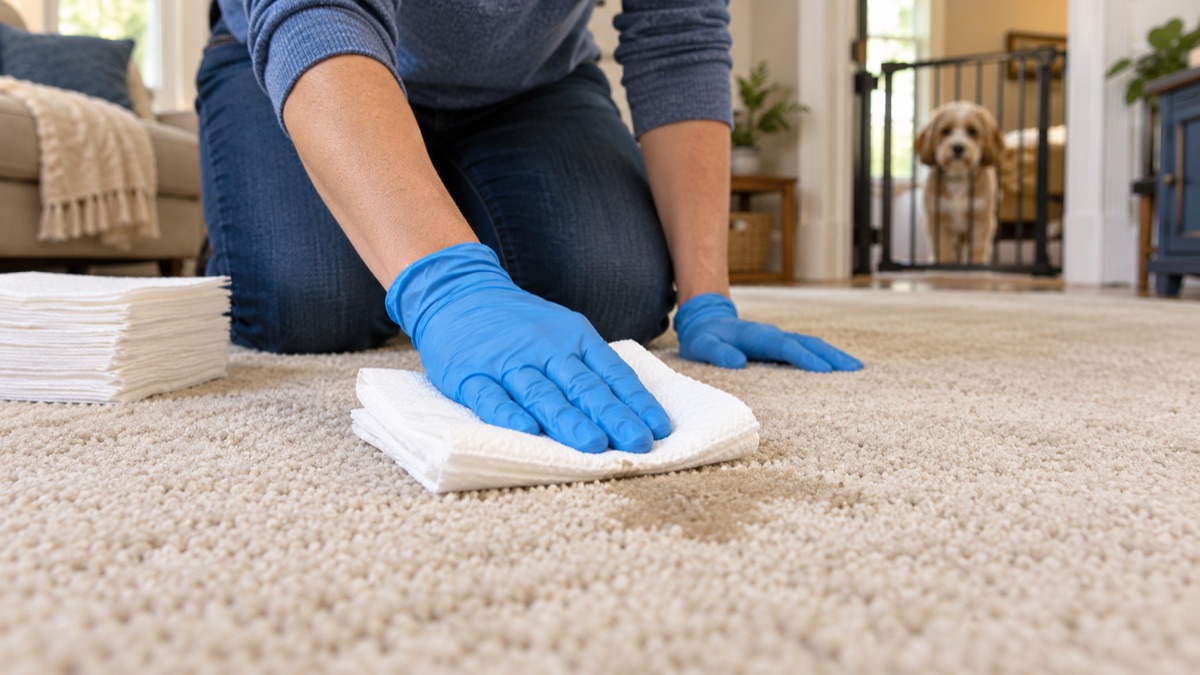
What should you do in the first few minutes?
Focus on removing the material you can reach without spreading it. You do not need to identify every stain chemistry before taking this first step. Get plain white absorbent towels, gloves, and a bag for waste. Keep foot traffic away so the accident stays contained while you work.
- Secure the area. Move your pet to a comfortable separate space and keep children off the spot.
- Lift solids gently. Use disposable material or a suitable scoop. Work carefully rather than pressing waste into the carpet.
- Blot liquid. Press a white towel onto the area, lift it, and use a clean portion. Repeat while moisture continues transferring.
- Skip heat and hard scrubbing. Avoid steam mops, hot irons, and aggressive brushes on the untreated accident.
- Check and test the treatment. Use a carpet-compatible pet product only after reading both the label and the carpet’s care guidance.
- Follow the finishing instructions. Respect the product’s contact time, any extraction step, and its drying and re-entry requirements.
For urine accidents, the Humane Society’s pet stain guidance recommends absorbing fresh liquid and testing odor treatments before use. Keep the first response simple; adding multiple household products makes later treatment harder to assess.
What if the accident is vomit or feces?
Lift the bulk first with gloves and disposable material, then blot remaining moisture. Select a product labeled for the type of mess and your carpet; a product for one stain is not automatically suitable for another. Follow waste-disposal and handwashing steps after cleanup. Keep the area unavailable to children and pets during treatment.
If you need sanitation after contamination, ask about a process and product appropriate for the carpet. Odor removal and routine carpet cleaning are not proof of disinfection. Some damage or contamination may require an assessment rather than repeated home spot treatment.
Should you pour water onto the accident?
Avoid flooding the carpet. You may remove some surface material while driving moisture into layers that are harder to reach. Follow the carpet and product instructions for any rinse, and recover moisture as directed. If you do not have a way to recover liquid or the area is already saturated, stop adding water and call for guidance.
What should you tell a professional cleaner?
- What happened: urine, vomit, feces, or an unknown spot.
- When you noticed it and whether the same area has been used before.
- The approximate area and any nearby spots.
- Every product or machine already used, including heat.
- Whether the carpet is still wet and whether odor extends beyond the visible mark.
Photograph the area before further treatment if that will help describe it. A cleaner needs the history as well as the appearance. Read how to remove pet urine from carpet for dried spots and recurring odor; that guide covers the longer treatment decisions after the immediate cleanup.
When should you ask Lotus Brothers for help?
Contact us for repeated accidents, widespread odor, delicate carpet, or a spot that remains wet or smells after appropriate treatment. Our pet stain and odor service serves Rogers, Bentonville, and surrounding Northwest Arkansas communities. Call (479) 364-4364 to discuss the condition and availability.
Frequently asked questions
Should I scrub a pet accident on carpet?
No. Lift solids and blot liquids with a white absorbent towel. Aggressive rubbing can spread the mess and damage the pile.
Can I use a steam mop immediately after a pet accident?
Avoid heat on an untreated urine spot. Blot first and use a carpet-compatible treatment according to its label; ask a cleaner about the appropriate process for persistent contamination.
What if I do not have pet cleaner right now?
Contain the area, lift solids, and blot liquid. Keep traffic away while you obtain a compatible product or ask for professional guidance. Avoid improvising a mixture of household cleaners.